.png)
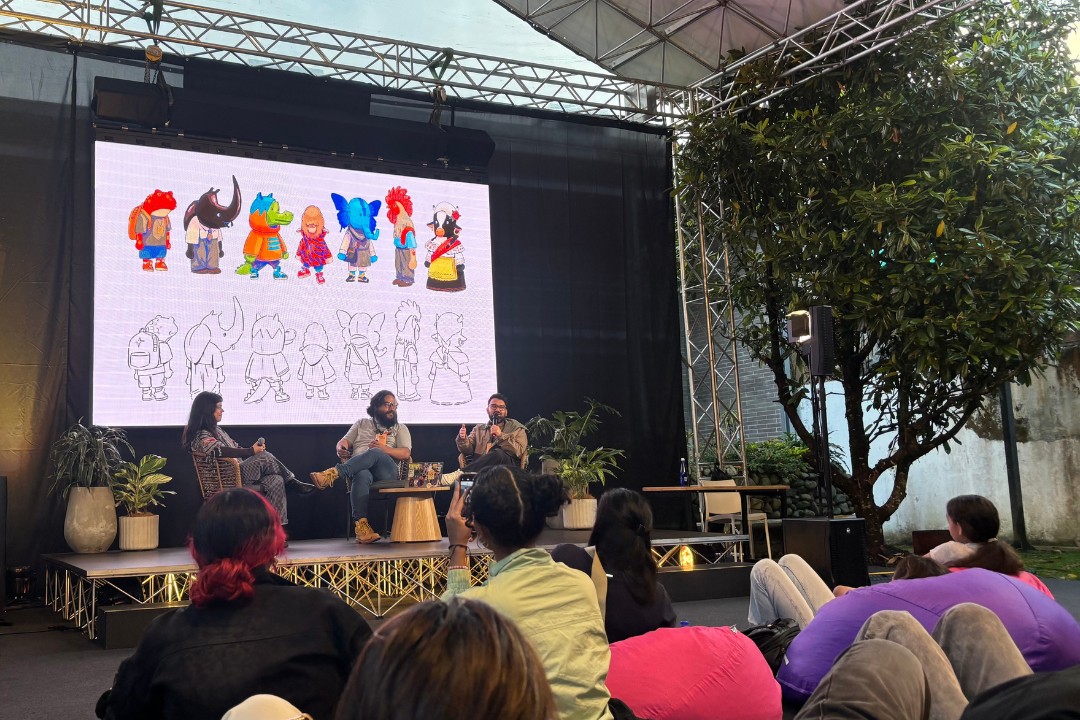
Who should own the intellectual property of the content created? During this conference, the lawyer Omar Umaña and Alei Valet Siv, representing Piragna, discussed the legal challenges that the creative industry faces when doing business, sharing their experiences on how to ensure your project can be monetized. They agreed and emphasized how important it is to make the proper agreements from the very beginning of a negotiation, clearly defining which parties own the intellectual property and in what proportions.
Often, animation studios cede the rights to the IP, especially in music videos, where multiple layers of copyright have already been inherited by the time the proposal reaches the animation or creative studios. In most cases, it is the producer who ultimately owns the rights.
Piragna shared a story about a simple character commission that nearly turned into a legal catastrophe. “Someone hired us to design a simple toad character; we paid a graphic designer close to $20 USD to create it and charged the client about $100 USD, not realizing the character was destined for a multimillion-peso campaign for Bogotá’s trash system.”
At delivery, the company expected full freedom to use the character across all channels. That meant the studio had to provide not only the artwork but also the legal security for its use, as stipulated in the contract. Once the campaign’s impact became clear, the original artist contacted the studio, demanding more money and claiming they had never ceded rights for such large-scale use. Fortunately, the studio had secured a robust contract from the start, strong enough to prevent escalation.
The incident became a critical learning experience: without airtight agreements with freelancers, a studio cannot guarantee “legal security” to its clients. If an artist sues, the studio risks breaching its contract and bearing the consequences. The takeaway is simple yet powerful: investing in solid contracts is far cheaper than facing legal disputes, and pricing should reflect not only the work itself but also the potential impact it may carry.
There are also cases when you find yourself working with someone else’s IPs. Alei Valet Siv noted that some IPs are particularly challenging, as strict standards often demand weekly reviews with the client, which can quickly turn into a tormenting experience. This process may even end in failure if the studio is unable to make the production public, resulting in financial loss. On the other hand, some brands succeed in conveying their values so effectively that studio teams naturally feel compelled to protect and nurture the brand.
AI was also mentioned as the question arose: who truly owns artificial intelligence–created pieces? One of the studio’s most recognized characters is a singing animated frailejón, symbolizing a movement to protect Colombia’s fragile ecosystems, such as the páramo where frailejones grow. A political movement began producing merchandise featuring their AI-generated version of the character, without any consent from the creators, politicizing the civil resistance the character originally represented.
Colombian law often moves slowly in cases like this, creating high costs for studios forced to face the “giant” lawyers of the government. The conclusion was sobering: some battles are simply not worth fighting.
There remains a vast gray area around AI and intellectual property. It is nearly impossible to forbid AI-generated versions of a character, and the use of AI does not automatically strip creators of authority. What is essential, however, is transparency in the creative process. Clear disclosure helps defend against disputes and strengthens the case when someone argues otherwise.
Among the key factors in managing intellectual property, the advice was clear: artists must educate themselves on the law. Too often, creators are not lawyers, and prevention is almost always less costly than facing legal consequences. Seeking legal counsel becomes essential whenever there is a genuine interest in your work.
There are two ways to register an idea in Colombia:
As one example, “Frisby is an artwork, and it’s protected all over the world.” This protection made it impossible for an impostor brand to operate successfully from Spain. The recommendation is to always evaluate when a “cease and desist” is worth pursuing, given the complexities of Colombian jurisdiction. Most importantly, creators should ensure that all authorizations from involved parties are properly documented during the creation process, including clear specifications on whether the work can be used for AI training.
Centro Cultural Javiera Londoño, Auditorio.
Miguel Zuluaga
.png)