.png)
Colombia has spent years preparing to meet the world's demand for animated content. Medellín, in particular, built the conditions: a creative cluster, a favorable tax regime, bilingual talent, and academic paths designed around the industry's actual needs. Over the last decade, its studios have produced for major brands and international platforms, expanding capacity and investing heavily in technological infrastructure.
The numbers from the Cámara de Comercio de Medellín and the Distrito show the macro side. Their December 2024 Clúster de Industrias Creativas report counted 5,928 creative companies in Medellín, 5% of the city's business base, with COP 4 trillion in 2023 sales and a 10-year compound annual growth rate of 16.7%. Colombian animation services helped the country drive the 23.1% Q1 2025 growth in non-mineral-energy exports tracked by Analdex.
The arrival of generative AI has unsettled the entire market, with content creation among the most affected areas. AI is now testing which business models can deliver greater returns, durability, and scalability, but the final verdict will not come from the technology itself. It will come from the audience.
Established studios continue to deliver polished work for global platforms, adapting pipelines to AI acceleration while keeping their creative technique largely intact. These are the companies behind the long-form animated series Netflix, Amazon Prime, and Disney commission from Colombia (the work that built Medellín's export reputation).
Creative agencies fold AI into their production stacks, positioning it as one capability alongside 3D, CGI, and VFX. They aren't animation studios in the legacy sense; they are creative firms for which AI is simply another output. Same brand clients, similar retainers, lower costs.
AI-specific studios are already designing their infrastructure and business models around AI content creation itself. Their goal is to produce feature-quality output, from concept to rendering, generated entirely by models.
Solo creators with nothing more than a phone and an idea reach millions overnight. Frutinovelas is the clearest example: using image-to-video tools and AI voice generation, it accumulated 30 million views in a week. No studio. No production company. Just people running Instagram and TikTok accounts.
The coexistence of these realities defines the new content-creation ecosystem. Visually pleasing content that once required years of infrastructure can now be created from a phone with cloud rendering.
This democratization comes with responsibility. The choice of what content thrives no longer rests with commissioners or producers; it rests with audiences. A diet of reels rewards speed, virality, and retention rather than quality. Frutinovelas and brainrot are more than viral cases; they are a warning of how absurd things may become in the AI era. As ownership of ideas grows murky and "anyone" can create their own version, the concept stops belonging to the creator alone. It belongs to the community that consumes it.
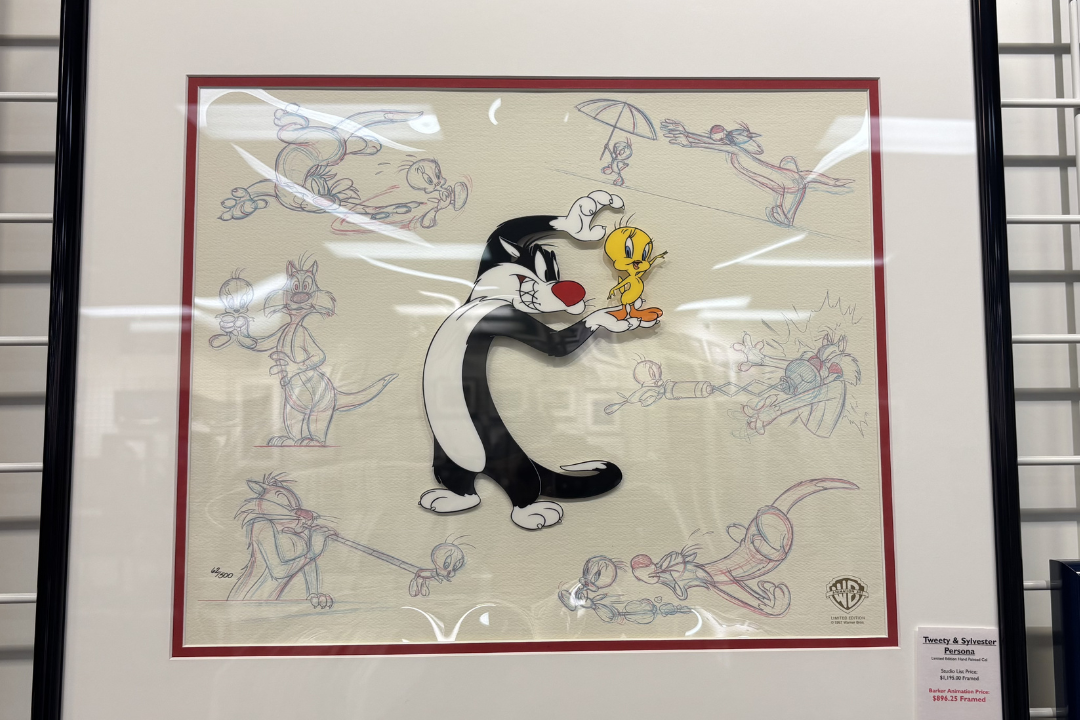
Every time a new animation method emerges, part of the soul of the previous technique fades. Hand-drawn frame-by-frame animation was once the standard; Digital 2D automated the interpolation and coloring process; 3D animation automated realistic lighting and particle animation. Each transition replicated the output more efficiently while stripping away more of the process that gave it weight. Now AI (hoping friends from the industry don't cancel me for this) has come to automate the animation process once again, with even less human intervention and quicker render times.
What gets lost is the residue of thousands of micro-decisions an animator makes per second of finished work: how a line wavers, where the weight sits, what a face does when no one is watching. The soul was once distributed across every frame, then every pose, and now every prompt, with an increasing tendency to rely on computational processes to replicate what the artist’s hand once carried.
Some artists, myself included, will argue that the animation process was never about efficiency. It was about a human being entangled with the work long enough that something of them transferred into it. Whether the market remembers that distinction is the real question, because the audience is what the algorithm optimizes for, and the algorithm has become the one deciding what is shown and what flops.
The companies that will thrive are those making content audiences actually want to watch. The future of Colombian animation will be defined not by whether AI is present, but by whether we, as creators and audiences, decide that what is made is worth making.
Miguel Zuluaga
.png)